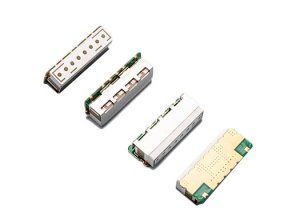
Ceramic Dielectric Filter

prod-banner
Product Classification
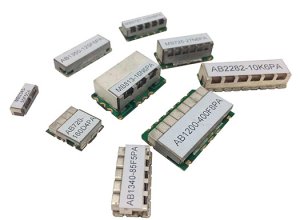
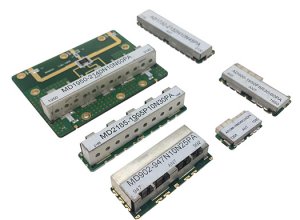
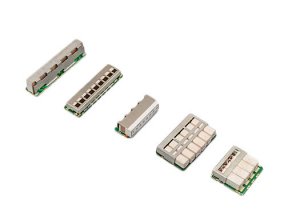
Ceramic dielectric filter is a passive RF component that uses a high-permittivity ceramic resonator to achieve frequency selection. It offers low insertion loss, high selectivity, compact size, and excellent temperature stability, making it widely used in wireless communication systems such as base stations, handsets, and RF front-end modules.
Ceramic dielectric duplexer combines two ceramic dielectric filters—typically a transmit filter and a receive filter—into a single compact component with a common antenna port. It allows simultaneous transmission and reception over a single antenna while providing high isolation between the TX and RX paths, making it ideal for miniaturized wireless communication equipment.
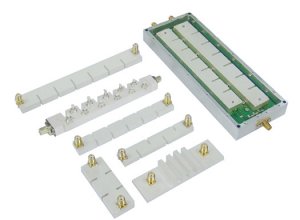
Ceramic dielectric waveguide filter uses a ceramic-filled waveguide structure to guide and filter electromagnetic waves. It combines the low-loss, high-power-handling advantages of traditional waveguide filters with the small size and light weight of ceramic technology, making it suitable for high-performance applications such as 5G base stations and microwave/millimeter-wave systems.
This series of ceramic dielectric filters is designed specifically for 5G small cell base stations, which require compact, high-performance RF filtering in dense deployment scenarios. These filters provide low insertion loss, high out-of-band rejection, and excellent power handling to ensure clean signal transmission and reliable network coverage in urban and indoor environments.
This series of ceramic dielectric filters operates in the S-band frequency range and is designed for satellite communication systems. They deliver high selectivity, low insertion loss, and stable performance under harsh environmental conditions, ensuring reliable signal transmission for satellite uplinks, downlinks, and related ground station equipment.
This series of ceramic dielectric filters is designed for global navigation satellite system (GNSS) applications, supporting Beidou, GPS, Galileo, and GLONASS signals. They provide narrow bandwidth, high out-of-band rejection, and low insertion loss to suppress interference and ensure accurate positioning, timing, and navigation performance in a wide range of devices.